

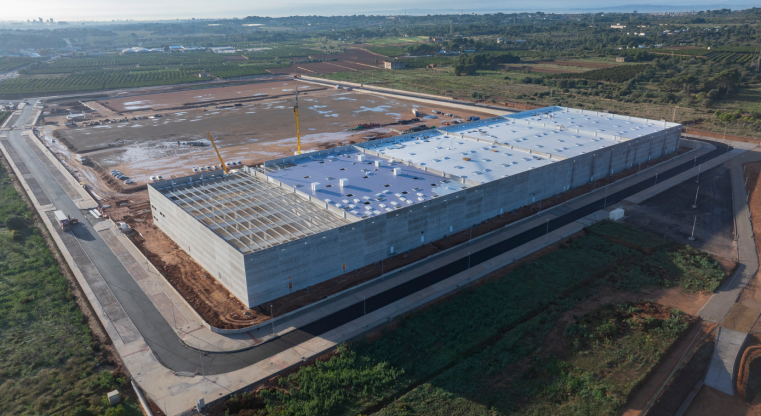
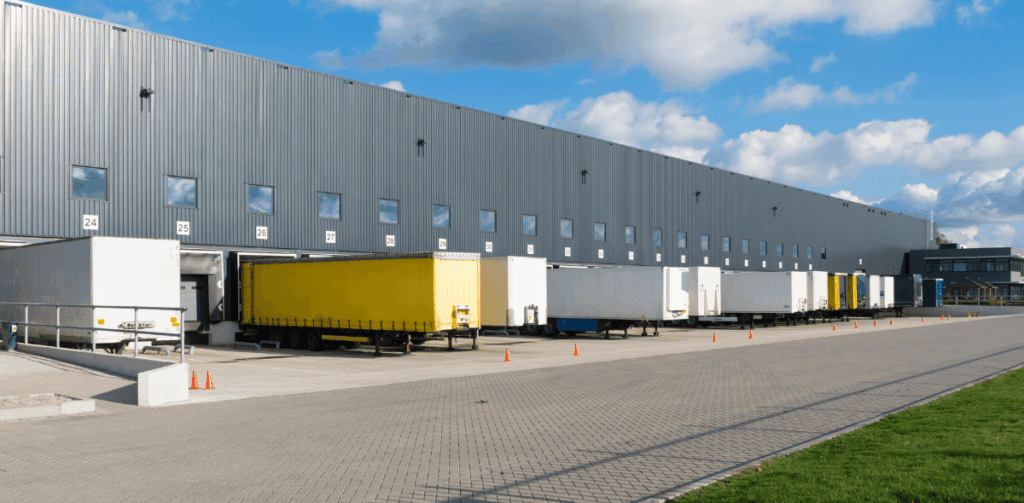
“Next-generation” logistics platforms, advanced technology, sustainable assets and high-performance facilities: the evolution of the spaces where logistics companies operate is evident in the features most demanded by today’s occupiers and investors—features that would have been unimaginable just a few decades ago.
Take a closer look at a logistics platform in just one click
But how and why have logistics platforms evolved so significantly over the years?
What are logistics platforms?
Logistics platforms are key assets within the supply chain and goods distribution network. These facilities play a crucial role in the efficient management of product flows from origin to final destination.
Over the past two decades, logistics platforms have undergone major transformation, driven by technological progress and changes in the way companies operate and distribute goods.
Also known as distribution centres, warehouses or logistics hubs, logistics platforms are facilities designed to store, manage and distribute goods efficiently. They can vary significantly in scale and complexity, from small local warehouses to large regional or international distribution centres.
These assets play a central role in the supply chain, enabling inventory management, product consolidation, order fulfilment, packaging and final distribution to customers, retailers or other logistics nodes. Their strategic location is essential for reducing lead times and optimising transport costs.
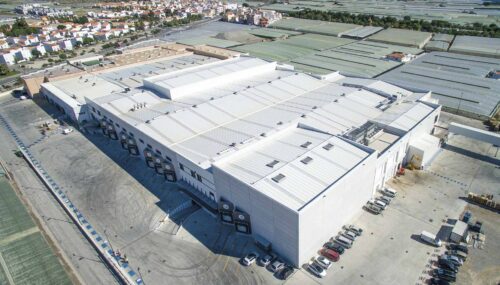
How logistics platforms have evolved since 2000
Since 2000, logistics platforms have experienced a series of major transformations:
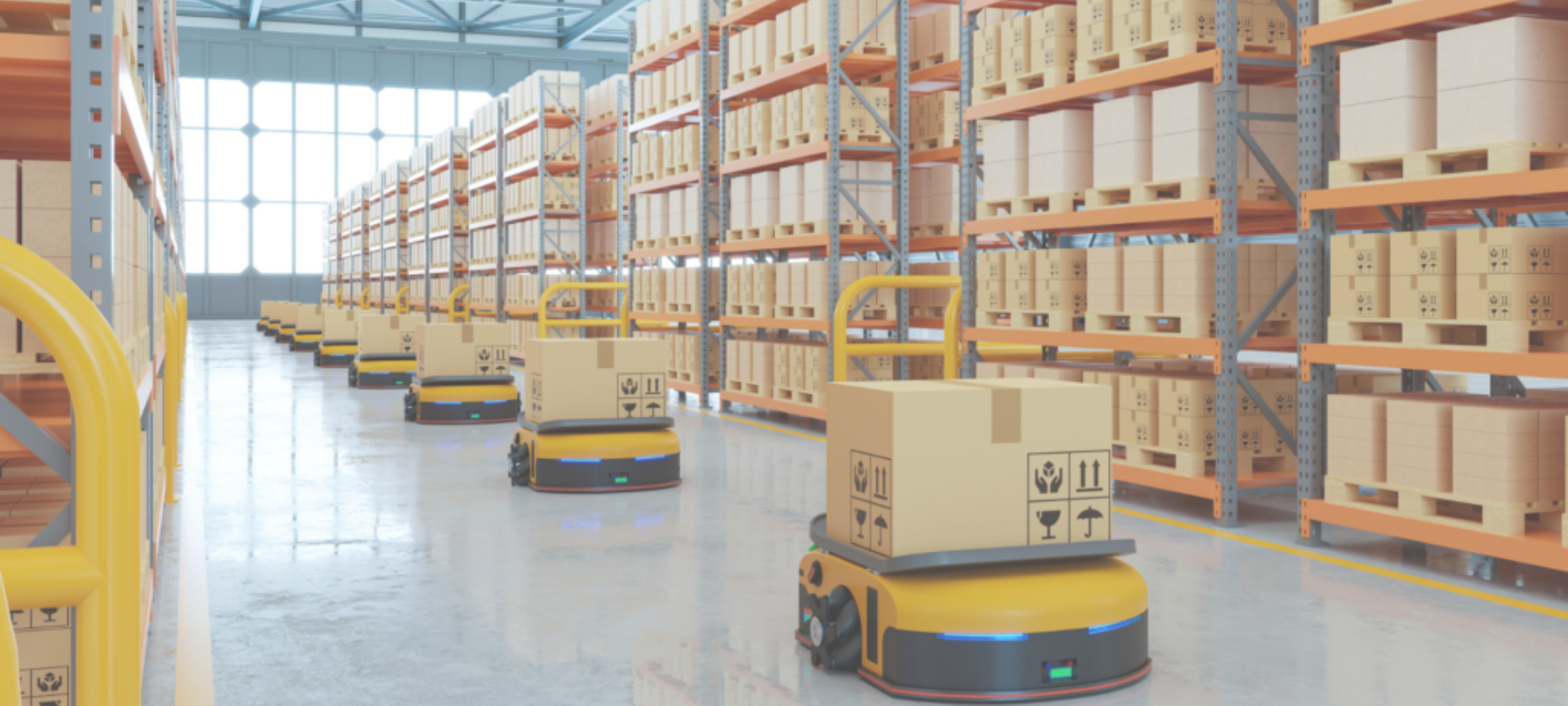
- Automation and robotics: One of the most significant changes has been the widespread adoption of automation and robotics in logistics facilities. This includes automated sorting systems, autonomous robots for order picking, and warehouse management systems powered by artificial intelligence. These technologies have greatly improved operational efficiency, accuracy and productivity.
- Information technology: The implementation of warehouse management systems (WMS) and transport management systems (TMS) has transformed how logistics operations are controlled and monitored. Real-time connectivity and end-to-end visibility are now standard features across modern logistics platforms.
- Logistics 4.0: The sector has embraced the principles of Industry 4.0, driven by digitalisation, the Internet of Things (IoT) and advanced data analytics. This has enabled more agile decision-making, better inventory control and improved product traceability.
- Sustainability: Growing environmental awareness has pushed the sector towards more sustainable logistics solutions. Route optimisation, energy efficiency and emissions reduction have become central considerations in the design and operation of logistics assets.
- Globalisation and e-commerce: The rise of e-commerce has accelerated the expansion and transformation of logistics platforms to meet increasing delivery expectations. At the same time, global supply chains have become more complex, increasing the need for efficient, scalable logistics infrastructure.
In short, logistics platforms have evolved significantly since 2000, driven by advanced technology, digital transformation and the need to adapt to changing market demands. These changes have improved efficiency, flexibility and sustainability throughout the supply chain, and they will continue to shape the future of logistics real estate.
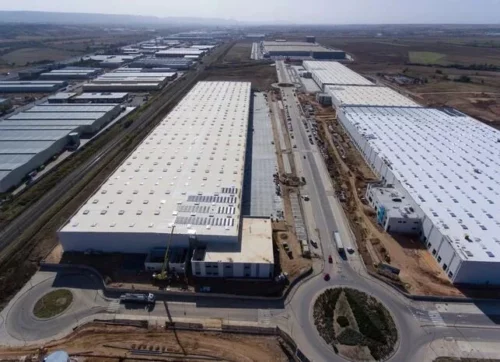
Evolution of logistics platforms by key characteristics
This transformation can be clearly seen in several of the factors that define a logistics asset. Let’s look at some of the most important ones:
1. Use
Logistics has evolved alongside industrial development. In its early stages, this subsector focused mainly on supplying raw materials and components for manufacturing. As industries became more specialised, logistics operations grew more complex, although facilities continued to function primarily as storage and transit spaces for industrial goods.
With the rise of globalisation, multinational companies began operating across multiple countries, creating demand for logistics bases located far from their headquarters. Large retail and distribution brands then began requiring logistics facilities to store products closer to their points of sale. In many cases, these facilities were operated directly by the distribution companies themselves.
By the late 20th and early 21st centuries, the emergence of e-commerce transformed the sector, forcing logistics platforms to adapt to a model in which goods were delivered directly from the facility to the end consumer. This shift drove the development of more versatile logistics buildings capable of handling a wide variety of products and operational requirements.
2. Size
The size of the most in-demand logistics facilities has also changed significantly. Driven by the growth of e-commerce—and further accelerated by the 2020 health crisis—logistics platforms have increased in both floor area and clear height. The objective is clear: increase storage capacity, reduce lead times and provide faster, more efficient service.
3. Location
The locations selected for logistics developments are also shaped by demand and the increasing complexity of the market. As a result, different types of logistics assets have emerged: large national distribution centres typically located within a radius of around 50 kilometres from major urban areas; medium-sized platforms positioned near provincial capitals for regional distribution; and smaller urban warehouses designed to support last-mile delivery.
In the first case, direct proximity to the city is less important than strategic positioning along major road and rail corridors, allowing efficient nationwide distribution from a central hub.
By contrast, regional and urban platforms are usually located closer to population centres, as end consumers now play a central role in shaping logistics demand.
4. Innovation
One of the clearest signs of evolution in logistics platforms is the level of innovation integrated from the earliest design stages. Social and economic priorities have shifted significantly, with growing emphasis on sustainability, energy efficiency and local economic impact.
In logistics facilities, one of the most important factors influencing investment and leasing decisions is the incorporation of energy-efficient solutions. Measures such as photovoltaic panels, optimised building orientation for natural daylight, and high-performance building envelopes for passive temperature control not only reduce operating costs but also improve the value of the asset and strengthen corporate reputation.
Another critical factor is the integration of automation and digitalisation across as many processes as possible, together with safety systems designed to protect people, goods and the building itself from a wide range of operational risks.
The evolution of logistics platforms has therefore been shaped by a market increasingly driven by online consumption and by users who are also more environmentally aware.
Example of a logistics platform
Over the past 25 years…
Over the past 25 years, the industrial and logistics real estate market in the Iberian Peninsula has evolved not only in quantitative terms—with strong growth, particularly in the last decade due to the e-commerce boom—but also in qualitative terms, through a major shift in the criteria clients prioritise when developing new assets.
We have moved from a market where land plots were primarily assessed based on buildable area to one where logistics platforms are evaluated according to a much broader set of technical and operational criteria.
In the early years of the century, companies were mainly looking for storage space—industrial warehouses located in business parks that were rapidly expanding along the main access routes to major cities. In many cases, these facilities were developed in areas with limited infrastructure and basic service provision. At that time, developers, owners and engineers focused heavily on maximising the number of loading docks, sometimes at the expense of overall buildability efficiency.
It was the beginning of the century, and strong investment in the industrial and logistics real estate sector was already emerging, with increasingly advanced projects aimed at developing logistics parks based on efficiency and safety criteria. Sustainability soon became an additional priority.
In recent years, logistics operators have increasingly prioritised operational ratios over purely buildable area or gross leasable area. Today’s occupiers are highly specialised and focus on technical parameters such as dock ratios, manoeuvring efficiency and other design variables that directly impact space optimisation and operational performance.
In this context, it is also essential to recognise the fully digital environment in which logistics activities now operate. This digitalisation extends to the assets themselves, creating greater demand for automation systems that improve traceability and allow more accurate, data-driven decision-making. These systems also contribute to the development of buildings with a lower carbon footprint, reinforcing the sector’s sustainability objectives.
 Facebook
 Linkedin


 ES
ES