
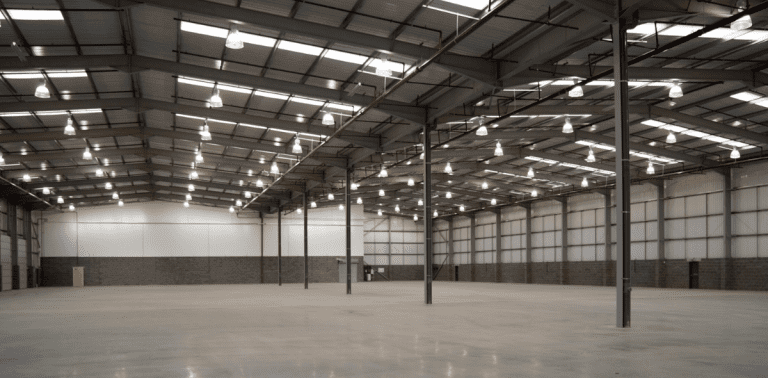
Both traditional and modular construction systems offer a wide range of solutions for industrial and logistics buildings. In a previous article, we analysed different structural systems and how to select the most suitable option based on project requirements and budget.
In this article, we complete that analysis by focusing on a key element of industrial design: how to choose the most suitable roofing system for your logistics facility.
Types of industrial roofing systems
There are four main types of roofing systems commonly used in industrial and logistics buildings:
- Single-skin metal roofs
- Sandwich panel (double-skin) roofs
- Deck roofing systems
- Self-supporting roofs
Beyond budget considerations, selecting the right roofing system requires analysing the building’s characteristics, its intended use, and environmental conditions.
Key factors include internal and external temperature conditions, acoustic requirements, and operational needs.
In recent years, rooftop photovoltaic installations have become a decisive factor, as they introduce additional structural loads and maintenance requirements that must be considered during the design phase.
All these variables directly influence the final decision.
Main types of roofing systems for industrial buildings
Single-skin (metal sheet) roofing
Single-skin metal roofing is widely used due to its low cost and ease of installation. It is typically applied in buildings where high thermal or acoustic insulation is not required.
This solution is recommended for facilities with limited roof access or low operational demands.
Materials commonly used include aluminium, steel, zinc and copper, with finishes such as galvanised or pre-coated surfaces.
Advantages and disadvantages of single-skin roofing
Main advantages:
- High durability and resistance to environmental degradation.
- Resistance to fungi, corrosion (with treatment) and fire.
Main disadvantages:
- High noise levels during rain or hail impact.
- Low insulation performance.
Sandwich panel (double-skin) roofing
This system consists of two metal sheets with a rigid insulating core (typically polyurethane foam), providing excellent thermal and acoustic performance.
These roofs are lightweight, easy to install and highly efficient, making them one of the most widely used solutions in industrial buildings.
Advantages and disadvantages of sandwich panel roofing
Main advantages:
- High energy efficiency and thermal insulation.
- Reduction of condensation and improved indoor comfort.
- Low maintenance requirements.
- Wide range of finishes.
Main disadvantages:
- Limited load-bearing capacity compared to other systems.
Deck roofing systems
Deck roofing systems are particularly suitable for large-span industrial buildings with low slopes.
They are composed of a metal structural deck, thermal insulation layer and waterproof membrane, ensuring continuous protection and eliminating joints.
This is the most common solution in logistics facilities, as it allows maximum use of interior height and provides excellent waterproofing performance.
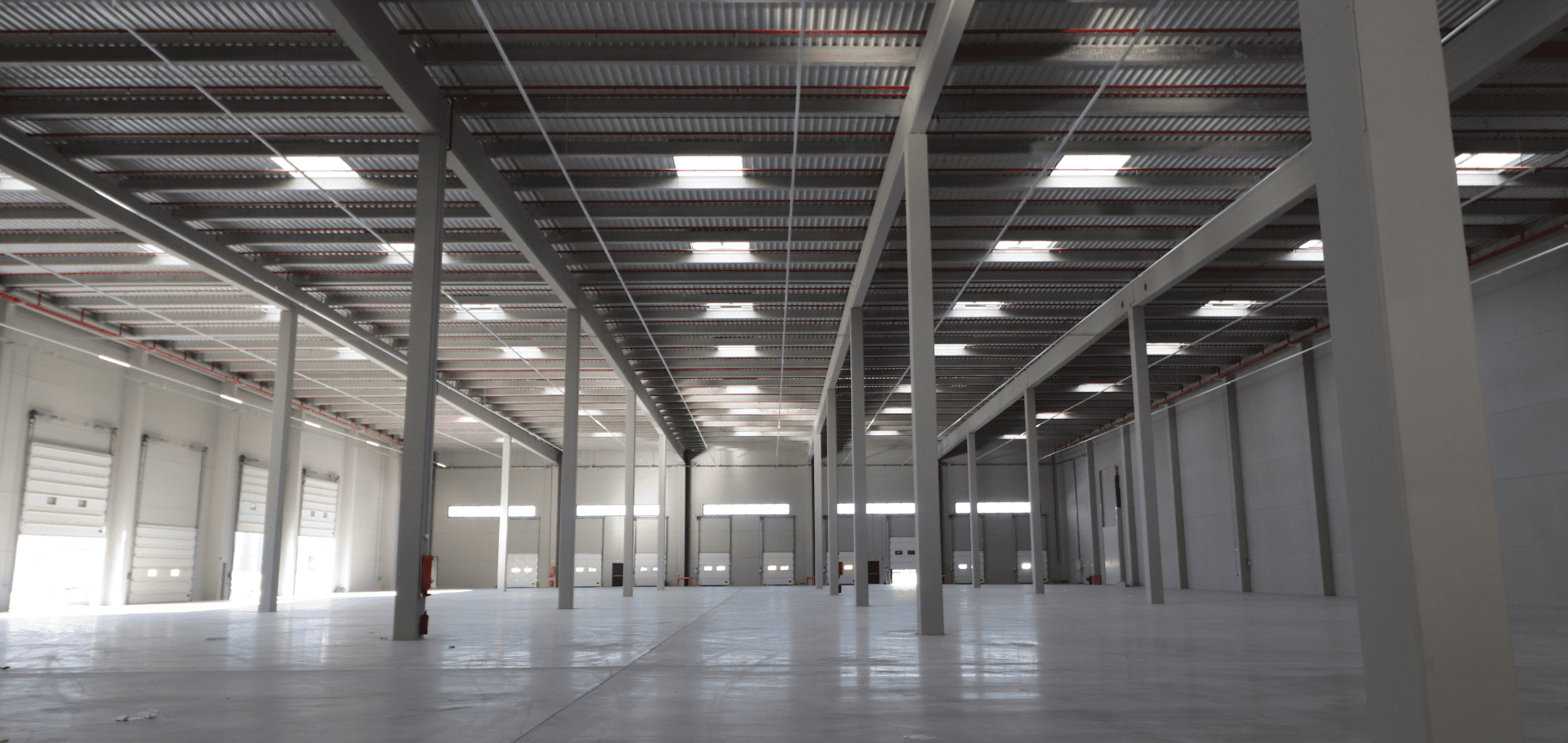
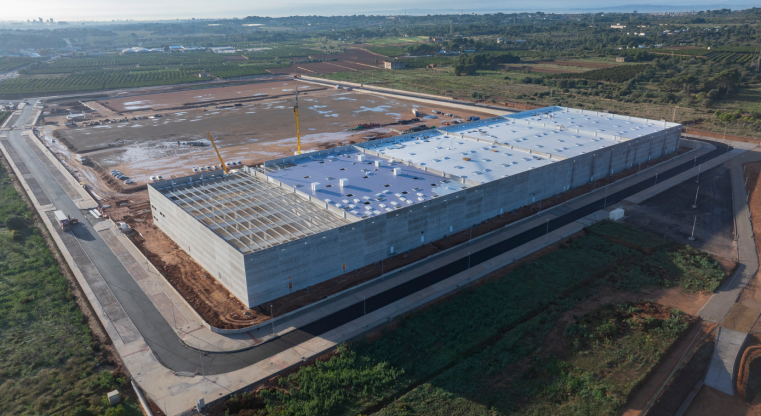
Deck roofing example
Below is an example of this system:
Advantages and disadvantages of deck roofing
Main advantages:
- Long service life and suitability for large surfaces.
- Elimination of thermal bridges and high waterproofing performance.
Main disadvantages:
- Limited load capacity.
- Requires careful detailing at junctions.
Self-supporting roofs
Self-supporting roofs are designed to span large distances without intermediate supports, making them ideal for large industrial spaces.
They provide efficient water drainage, snow shedding and resistance to wind loads.
Advantages and disadvantages of self-supporting roofs
Main advantages:
- No need for secondary structural elements such as purlins.
- Suitable for spans of up to 30 metres.
- Flexible design options.
Main disadvantages:
- Require specialised installation.
- Limited capacity to support additional loads.
Which roofing system is best for your industrial facility?
Selecting the right roofing system depends on multiple factors, including the building’s use, climate conditions, regulatory requirements and budget constraints.
- Single-skin roofs: suitable for low-demand environments with minimal insulation needs.
- Sandwich panel roofs: ideal for improving energy efficiency and indoor comfort.
- Deck roofs: the preferred solution for logistics facilities due to their performance and scalability.
- Self-supporting roofs: best suited for large-span buildings requiring open interior layouts.
Ultimately, the optimal solution depends on the specific requirements of each project. A detailed technical analysis is essential to ensure the best balance between cost, performance and durability.
If you need expert advice on selecting the most suitable roofing system for your industrial or logistics project, the ASPOR Engineering team is ready to support you.
 Facebook
 Linkedin