

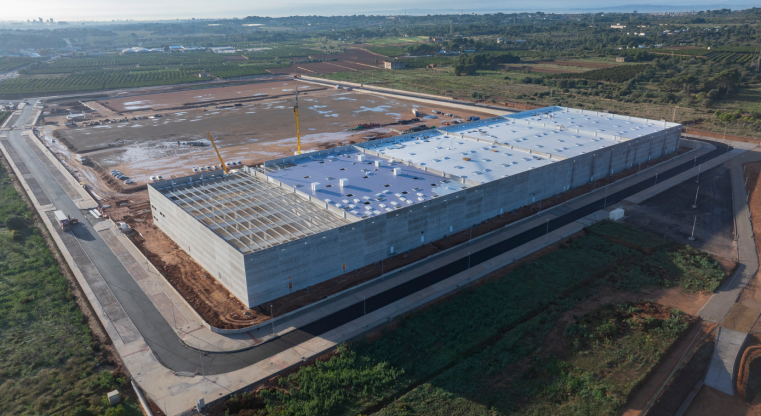
Industrial and logistics buildings can be classified according to multiple criteria, including size, functionality or the type of goods they are designed to handle. However, from a construction perspective, we can identify different types of industrial building structures based on the materials used and their structural system.
This distinction is critical, as each material provides specific performance characteristics, such as durability, load-bearing capacity and fire resistance.
Based on this classification, industrial buildings can be divided into three main structural types:
- Steel structures
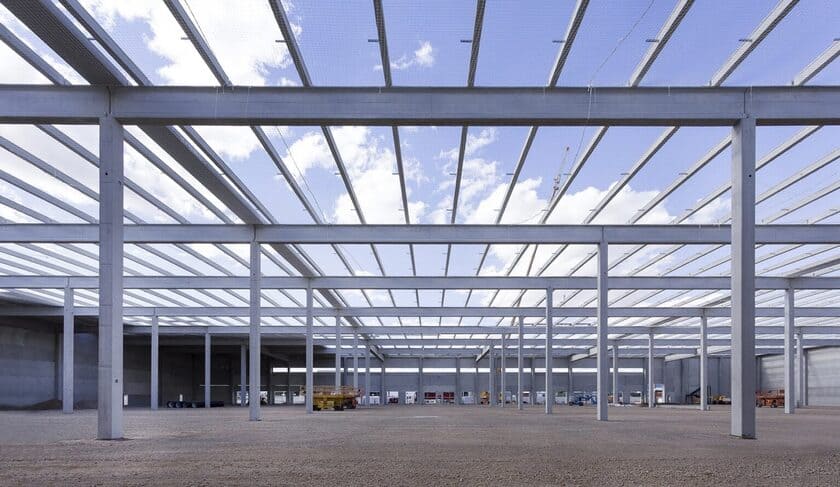
- Concrete structures
- Mixed structures (steel and concrete)

Main types of industrial building structures
Steel structures
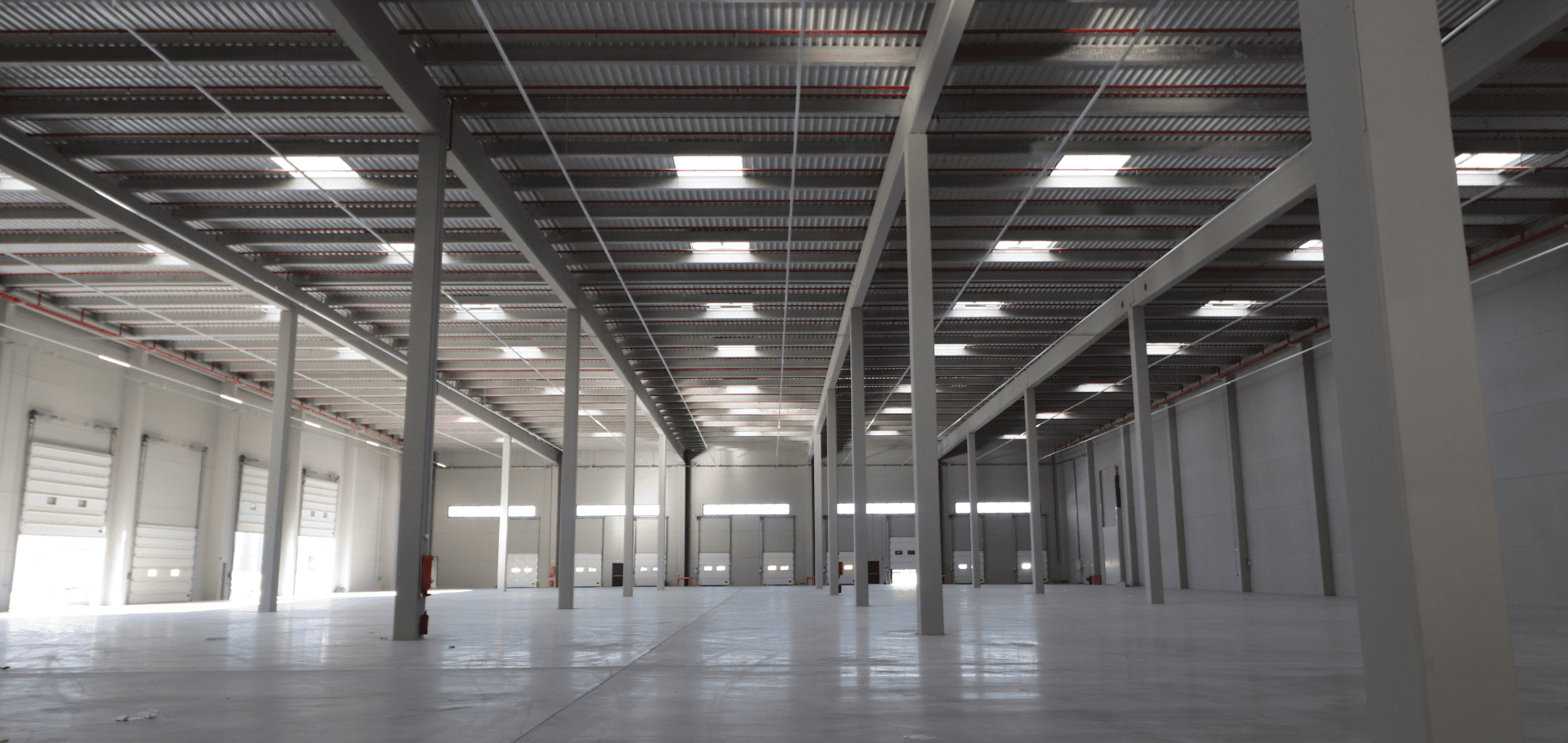
Steel structures offer several advantages compared to concrete solutions, particularly in terms of construction speed. Their ease of transport, prefabrication and assembly significantly reduces execution timelines.
Although steel structures are less rigid than concrete structures, they provide additional benefits such as increased natural light and greater design flexibility. However, fire resistance must be carefully considered.
To ensure adequate fire protection, specific treatments are applied, including intumescent coatings, sprayed fireproof mortars or protective cladding systems.
Example of steel structure in industrial buildings
Below is a video illustrating this type of structure:
In summary, steel structures are a highly efficient solution due to their fast execution and logistical advantages. While they require specific fire protection measures, they enable lighter, more flexible and well-lit industrial spaces.
Steel structures require regular maintenance, particularly anti-corrosion treatments, to ensure long-term durability.

Concrete structures
Concrete structures involve higher costs and longer construction timelines compared to steel solutions. However, they offer superior strength, durability and structural rigidity, making them suitable for demanding industrial applications.
Concrete also allows for greater versatility in design through the use of formwork systems, enabling the creation of customised structural solutions.
One key advantage is that concrete structures generally do not require additional fire protection or anti-corrosion treatments, as the material inherently provides high resistance to both.
The development of precast concrete systems has significantly reduced on-site construction times, improving efficiency while maintaining structural performance.

Mixed structures (steel and concrete)
In recent years, mixed structures combining steel and concrete have become increasingly popular in industrial and logistics developments.
This approach integrates the advantages of both materials, achieving an optimal balance between construction speed, cost efficiency and structural performance.
Compared to fully concrete structures, mixed systems reduce construction time and costs, while maintaining high levels of resistance and durability.
When selecting the most suitable structural solution for an industrial or logistics building, it is essential to consider budget constraints, project timelines, operational requirements and the specific activity to be carried out within the facility.
Fire risk, for example, varies depending on the intended use of the building and may determine the choice of structure and protection systems.

At ASPOR Engineering, as a specialised engineering consultancy in industrial and logistics building projects, we provide expert guidance to help clients select the most appropriate structural solution for their developments.
Summary
There are three main types of structures in industrial buildings: steel, concrete and mixed systems.
Steel structures offer speed and flexibility but require fire protection and maintenance. Concrete structures provide superior strength and durability but involve higher costs and longer timelines.
Mixed structures combine the advantages of both, optimising costs and execution time.
The final decision depends on budget, deadlines, operational needs and fire safety requirements associated with the building’s activity.
If you found this content useful, explore our blog for more insights into industrial and logistics construction.
 Facebook
 Linkedin


 ES
ES